
Prof. Qionghai Dai

Prof. Dai is an Academician of the Chinese Academy of Engineering, Dean of the School of Information Science and Technology at Tsinghua University, Director of the Beijing National Research Center for Information Science and Technology, and President of the Chinese Association for Artificial Intelligence. His primary research interest includes artificial intelligence and intelligent photoelectronic computing. He has been dedicated to theoretical and technological innovations in these fields. He was the chief scientist of 973 Program project of the Ministry of Science and Technology, key research instrument project and science center project of the NSFC. He developed a series of in vivo mesoscopic microscopy instruments and equipment, explored cognitive intelligence models, and developed optoelectronic intelligent computing chips. He has published hundreds of papers on top-tier journals, including Nature, Science, Cell and their sub-journals.
Prof. Bobak Mosadegh
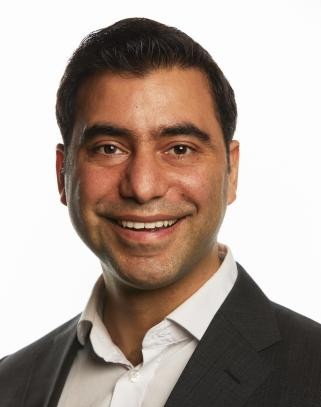
| Prof. Mosadegh received his B.S. and M.S. in biomedical engineering from the University of California, Irvine. He performed undergraduate and graduate level research in Professor Noo Li Jeon’s lab, working on gradient generating microfluidic devices. Dr. Mosadegh received his Ph.D. from the University of Michigan, Ann Arbor while working in the lab of Shuichi Takayama. His research involved the development of microfluidic integrated circuits and various cell patterning methods using aqueous two-phase systems and microfluidic devices. Under the guidance of George M. Whitesides, Dr. Mosadegh performed his postdoctoral training at Harvard University and the Wyss Institute of Biologically Inspired Engineering. His research focused on developing two technologies, i) a 3D paper-based cell culture system for the study of ischemic gradients on cancer cells and cardiomyocytes, and ii) actuators and control systems for soft robotics. Dr. Mosadegh started as an Assistant Professor in the department of Radiology, at Weill Cornell Medicine, in Nov. of 2014, and is currently an Associate Professor. He also served as the Director of the Dalio Institute of Cardiovascular Imaging and was the convener for the ISO working group on cardiac occluders. |
Prof. Binxing Fang
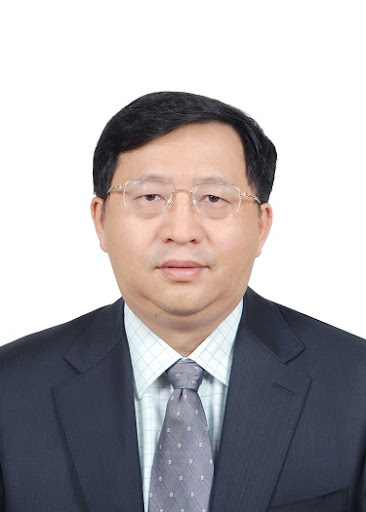
Prof. Fang is a network and information security expert, an academician of the Chinese Academy of Engineering, director of the National Engineering Laboratory for Cybersecurity Technology, chief scientist of China Electronic Corporation, honorary dean of the School of Computer Sciences and Cyber Engineering at Guangzhou University, chief advisor of the School of Computer Science at Harbin Institute of Technology (Shenzhen), and director of the Key Laboratory of Trusted Computing and Services of the Ministry of Education at Beijing University of Posts and Telecommunications. He currently serves as president of the Chinese Society for Chinese Information Processing and chairman of the Network and Information Security Technical Committee of the China Association for Standardization. He has served as president of the China Cyberspace Security Association, vice president of the Internet Society of China and director of the Network and Information Security Working Committee, vice president of the Computer Society of China and director of the Computer Security Professional Committee, and vice president of the China Institute of Communications and director of the Communications Security Technical Committee. He has published three books and over 400 articles. He is currently engaged in research on key technologies such as the Internet of Things and security, network attack and defense, big search, cloud computing and security, and smart city security.
Prof. Max Q.-H. Meng
Professor Max Q.-H. Meng is elected to Fellow of the IEEE, Fellow of the Canadian Academy of Engineering, Fellow of the Hong Kong Institute of Engineering, Outstanding Talents in Guangdong Province, and Outstanding Talents in Shenzhen. Professor Max Q.-H. Meng is an international well-known scholar engaged in the research of medical robots, robot perception and intelligence. Many research projects of Prof. Meng are leading the world. He leads more than 60 scientific research projects from the National Natural Science Foundation of China, the Ministry of Science and Technology, the National 863 Program, the National Science and Engineering Research Council of Canada, the Hong Kong Research Grants Committee, and the Hong Kong Innovation and Technology Commission. He has published 168 journal papers, 491 conference papers, and 10 co-authored monographs. The papers have been cited over 10,000 times and the H-index is 54. 148 conference reports are invited.
 © 2025 NSFC-ICAIR. All rights reserved. Contact: ai2025.hku@gmail.com